Lavinia Fisher: Charleston Legend

If you live in or visit Charleston, you have probably heard the name, Lavinia Fisher. Her name is uttered more often this time of year when people repeat ghost stories and legends in celebration of Halloween. Charleston is known for its many ghost stories and there is a vibrant tourist business surrounding the paranormal and ghastly stories of murder. And while there were many murderous deeds committed in Charleston, the stories surround Lavinia have become more fiction than fact over the years.

The legend of Lavinia Fisher claims that she was the first female serial killer to be executed in the United States. The story that most people hear goes like this. Lavinia and her husband John owned an Inn called Six Mile Wayfarer House, which as the name implies, was located six miles outside of town. Lavinia was said to be a charming and attractive 27-year-old woman. Travelers coming in and out of Charleston began to be reported missing and people in the area began suspecting the couple. A group of vigilantes was organized to go to the Inn and conduct an investigation. The group did not find anything but left a man named David Ross there to keep watch. He was attacked in the early morning by two men and then brought before a group of mostly men. Lavinia Fisher was in the group and is said to have choked him and then smashed his head through a window. Ross was able to escape and went back to Charleston to report what had happened.

Around the same time, a traveler from Georgia named John Peoples came to the Inn on his way to Charleston. He was offered a meal and tea but was told there were no rooms available. After chatting a while with the proprietors, Lavinia excused herself to make him so tea and when she returned she told him that a room had opened up if he was still interested which he said that he was. John decided that he did not want the tea that had been brought to him, but instead of appearing rude he emptied his mug when the proprietors were not looking. John was eventually shown up to his room but by this time had begun to get an uneasy feeling. He decided to sleep in a chair in the room instead of in the bed. At some point in the night, John awoke from a loud sound and realized that the bed had disappeared into a hole in the floor. He is said to have escaped through the bedroom window and rushed to report what happened to the Charleston authorities.

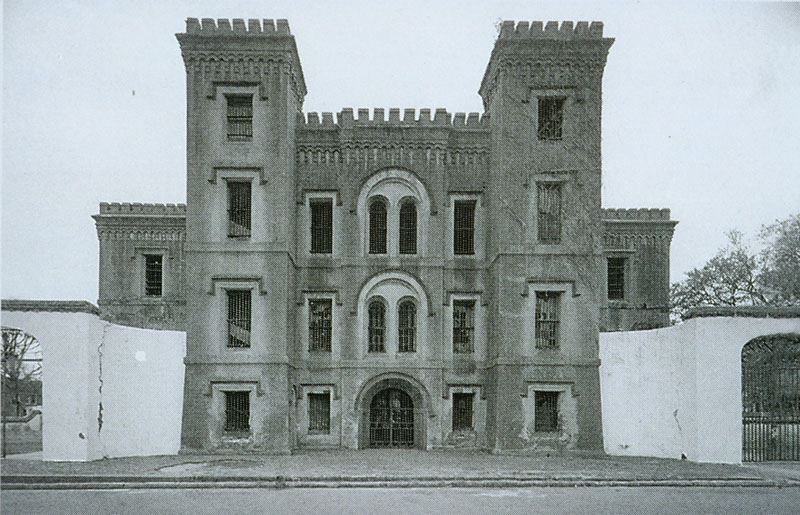
The authorities came to arrest the Fishers as well as two other men who worked at the Inn. It is said that during their search of the Inn they found items belonging to dozens of travelers, secret passageways, a trap door in the bedroom, as well as a substance that could be used to make someone sleep for many hours. Most importantly they were said to have found the remains of hundreds of people on the property. Both John and Lavinia Fisher pleaded not guilty but both were found guilty of robbery and murder and were sentenced to be hung. After their conviction, they tried to escape from the Old Charleston Jail, but only John was able to escape and was soon after recaptured.

They were both brought to the gallows behind the jail on February 18th, 1820. It is said that Lavinia wore her wedding gown and had to be carried up to the gallows while she screamed and struggled. Right before she was to be hung she addressed the crowd and said, “If you have a message you want to send to hell, give it to me- I’ll carry it.” She then jumped off the gallows herself and died quickly. The various stories then have her being buried in either The Old Circular Church or The Unitarian Church graveyards.

While this story is certainly titillating it does not seem to have much truth to it. First of all, Lavinia and her husband John were not convicted of murder. They were both convicted of highway robbery which was a crime punishable by death. This was the punishment originally used in England for the same crime. Charleston was a major player in trade and business at the time, and anything disrupting this commerce was seen as a major crime. The actual arrest was reported in the Charleston Courier on February 22nd, 1819. It was reported that a group of citizens had gone out to stop robberies that had been occurring on the road. They first burned a house 5 miles out and kicked out the residence of that establishment. They then traveled one more mile out and expelled the residents there. Someone was left to guard the house (the John Peoples of the legend) but was set upon by several men and beaten and robbed. When the authorities returned, they arrested all the people at the house (three men and two women) and then burned the house to the ground. In an outbuilding of the property, the recently butchered carcass of a cow was found which was determined to have been stolen from a neighbor. Those arrested were John and Lavinia Fisher, William Heyward, James Elway, Jane Howard, and Seth Young. The article goes on to say that it was believed that there were others yet to be arrested who were involved.

Another interesting piece of this story is a letter that was printed in the City Gazette and Daily Advertiser on February 2, 1820.  It is written by a man named Joseph W. Roberts and in this letter, he claims that he and another man named Andrew Larr were the ones to actually rob John Peoples.  In this account, he says that the Fishers and William Heyward knew nothing of the robbery.

However, there does not appear to be any actual proof that there was a trap door, tunnels under the house or multiple bodies found.  There were two people’s remains found on the property but they were never tied to the Fishers.  I have not been able to find anything suggesting that there was ever any sleeping medication used.  Everything points to the couple being a part of a group of highway robbers.

John Fisher did actually escape from the Charleston Jail.  There was a proclamation printed in the Southern Patriot on September 14, 1819, offering a $500 reward for his recapture.  This reward would be the equivalent of about $10,000 today.  On the day of execution, it was reported that John Fisher was calm and a letter was read that he had written once again claiming his innocence but resolved to his fate.  There was not much about how Lavinia went to the gallows except that the papers reported she did not go willingly and all expressed the idea that she was expecting a last-minute reprieve.  There were some who felt it was not right to execute a woman for this crime as they felt she would only be following the will of her husband and therefore not responsible.

The couple were not buried in either of the church graveyards but were buried in the potter’s field near the jail.  This hasn’t stopped tour guides from claiming otherwise and for people reporting seeing her ghost n these spots.  Others have reported her ghost appearing in the Old City Jail wearing her wedding gown.  The Travel Channel did a show on her jail cell and claimed to record her voice.  However, in this clip, you will see they are also repeating things from her legend which are not based on fact.

Another fun little bit is this song written by the group American Murder songs called Pretty Lavinia.

For more information:

Legends of American: Lavinia Fisher

Wikipedia Article about Lavinia Fisher

“Communication”. City Gazette and Daily Advertiser (Charleston, South Carolina). 2 Feb 1820. Page 2.

“A Proclamation”. Southern Patriot (Charleston, South Carolina). 14 Sep 1819. Page 3.

“Execution!” City Gazette (Charleston, South Carolina).  19 Feb 1820. Page 2.
Polly Floyd: The Witch of Clarendon County

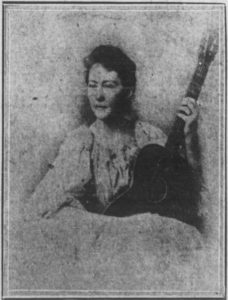
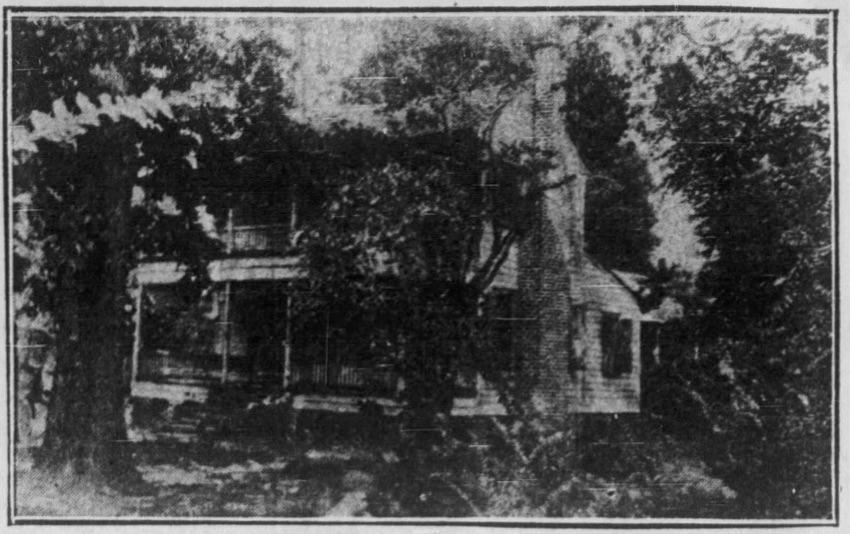
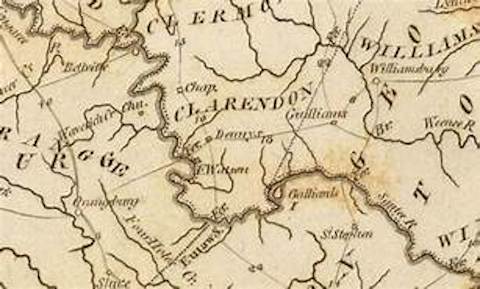
According to newspaper articles, Polly Floyd died on March 11th, 1889 in the township of Douglas in Clarendon County after having lived a very interesting life.  According to these articles, Polly fell in love and was engaged to be married to Morris H Floyd, a local farmer.  It is said that her parents did not approve of the match and when they decided to move the entire family to Alabama she was forced to leave Morris behind.  But apparently, Polly was more resolved than her family realized.  Soon after arriving in Alabama, she left her family and began a journey back to South Carolina and her fiance.

This journey, which would have taken place in the first half to the 19th century, was a perilous undertaking, especially for a young woman.  The entire journey would take her about a year.  During her journey, it is said that she was captured by Cherokee Indians in Alabama and lived with the “medicine man” and his family for three months.  During this time, she is said to have learned about using herbs for healing.  She was released by US soldiers and continued on her way.  Within a few weeks of arriving back in Clarendon County she was reunited and married to the man she originally intended to marry. The articles that were written about Polly state that she was seen as a bit of a witch.  Not only did she use herbal medicine but it appears that she was also known for oracles and fortune telling.

I first came across this story when I was working on a place study of Sandy Grove Township which is very close to Polly’s hometown of Douglas.  I felt compelled to learn more. There is much that I still wish to learn about her and I am hoping that someone who reads this post may be from this family and has possibly heard stories about her.  I would love to hear what has been passed down about Polly.

What I do know is that her birth name was either Mary or Maryella.  It is listed both ways on different census years.  Unfortunately, I have yet to be able to find her maiden name.  According to the census to the census records, she was born around 1812, making her 4 or 5 years younger than her husband.  The story involving her encounter with Cherokee Indians leads me to believe that her journey from Alabama to South Carolina took place around 1838 when she was 26 years old.  This would have been the year that President Andrew began enforcing the Indian Removal Act of 1830 and pushed through the Treaty of New Echota.  This treaty was established by the United States government and a minority group of Cherokee Indians and called for the Cherokee to relinquish land in the southeast and move west onto reservations.  Thus began what is known as the Trail of Tears.

In 1840, Morris is listed on the census with a female adult.  This was the last census before the government began recording the names of all household members.  It could be argued that the female in the household was not Polly as the age box ticked for her states she is between the ages of 15 and 20.  However, I think is more likely that it was reported incorrectly or that the census taker mistakenly marked the wrong box.  In all of the following censuses, Mary is listed as having been born in 1810 or 1812.  The most interesting tidbit I learned from census records was the entry for 1870.

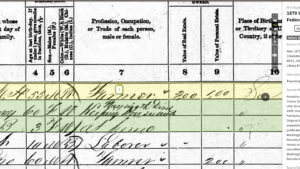
Mary is listed under husband whose occupation is listed as “Farmer”.  The first part of her listed occupation is “Keeping House” which was listed for all women whose main occupation was keeping her own house.  However, directly next to this is the word “and” and then there is additional writing above this.  I will confess that I have had a very difficult time making out what is written there and am still not absolutely sure.  I posted this photo on a few genealogical facebook pages asking for opinions and got quite a wide range of responses.  Some thought it said “Playing with David” which seems to be the most unlikely reading of it.  Others thought it might be “Playing the Devil” which could go along with her reputation as a witch but also seems highly unlikely on a government document.  The other suggestion was that it has something to do with preparing a body after death.  Maybe “Preparing the Dead”.  This seems more likely as this was a job that usually fell to women at the time.

Unfortunately, this scant information is all I have been able to uncover so far.  I do know that Morris H Floyd, her husband, was one of seven children mentioned in Jesse Floyd’s probate records in 1851.  He would have inherited a portion of his father’s property who was also a farmer who seems to have lived the majority of his life in Sumter.  I will be continuing to dig more in the future but if anyone reading this has information, I would love to hear from you!

You can read the newspaper articles about Polly’s death here:

Romance of a Reputed Witch

Captured by the Indians: An Interesting Story of the Life of Mrs. Polly Floyd


Sharecropping: One Family’s Experience

After the end of the Civil War, sharecropping and tenant farming became a popular economic system in the South.  The system helped large landowners who had once depended on slave labor to produce their crops but who could not afford to pay wages and taxes to still profit off their land.  It also provided a way of survival for poor black and white farmers who did not own property.  Tenant farmers usually came into an agreement with equipment and mules and were thus able to negotiate better terms.  Sharecroppers were considered lowest on the economic ladder as they came with basically nothing but their ability to work.

My father, Pete Parker, grew up in a sharecropping family in South Carolina and I recently sat down and asked him to share a little about what that experience was like.  Here is a video of that interview:

My dad’s story has always fascinated me.  As he talks about in this video, he grew up in a sharecropping family and dropped out of school in the 8th grade to help on the farm.  He eventually joined the Air Force, complete his GED, went to college, and then completed law school.  He has run for the South Carolina legislature, been the South Carolina Consumer Affairs Advocate, and the Director of South Carolina Worker’s Compensation.

To find out more about sharecropping check out these links:

Sharecropping on Wikipedia

Sharecropping in the New Georgia Encyclopedia

Previous Generations of This Family Picked Cotton on This Property. Now, They’ve Reclaimed it.

Discover you family history through historical newspapers at Newspapers.com

St. Barnabas Mission: Summerville, SC

Recently, a distant cousin emailed me about our mutual Driggers family line that lived in Clarendon, Williamsburg, Berkeley and Dorchester counties.  This family line has always been somewhat hotly debated among ancestors concerning their origins.  I am not going to delve too deeply into all the theories but most agree that family has always been considered racially mixed.   In our correspondence, he mentioned a Church that many of his Driggers ancestors attended that was located in Summerville, S.C.  What really got my attention was he mentioned that the Church had been established to serve the “Summerville Indians”.  I had never heard this term before and definitely wanted to find out more.

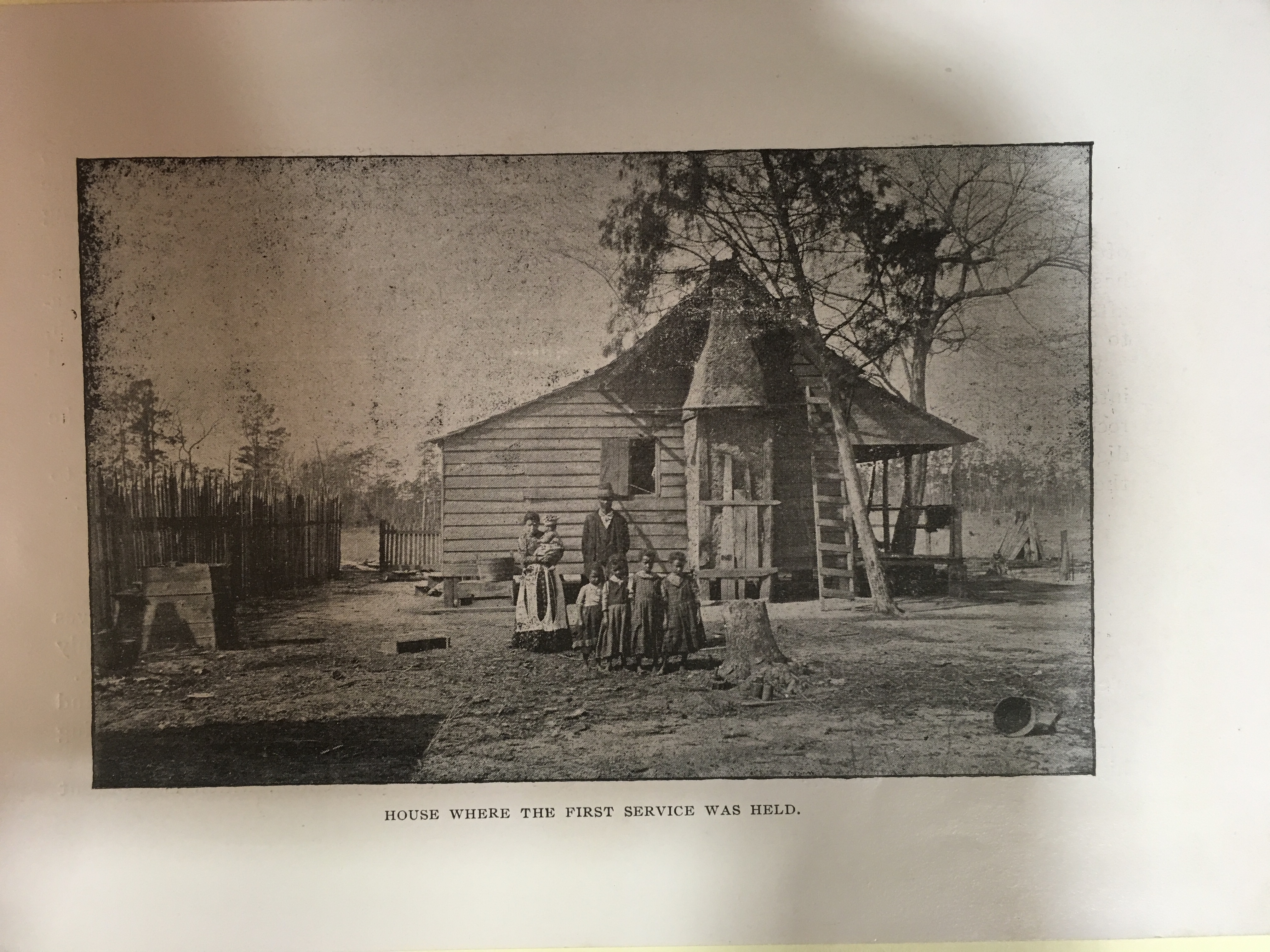
In 1883, Rev. Legrande F. Guerry (father of the late Bishop Alexander Guerry)  who was the pastor of St. Paul’s Episcopal Church in Summerville, South Carolina, decided to attempt outreach to the people in the more rural areas outside of the city.  Many of these people were referred to as “Summerville Indians” because they were believed to be mixed race descendants of local Native American tribes.  He approached a Mrs. Driggers who he felt would have a degree of influence as she had a large number of children and grandchildren in the area. This particular Mrs. Driggers is never identified by her first name but some possibilities include Hester Driggers, Celia Driggers, Nancy Burbage Driggers, and Martha Driggers.  Though Mrs. Driggers was a Baptist, she welcomed the preacher into her home and the first meetings were held there and were attended by many children (many who were her grandchildren) and a few adults.

The home where services were first held.


After several years, the number of people attending grew and Rev. Guerry obtained permission to build a small building on a vacant lot to house a school house. The building was put up by the Reverend and some of his small flock. Services were held there as well as school being taught. After several more years, this building became too small to serve the needs of those who attended and the Mission began looking for alternatives. The chapel was consecrated on Easter Monday of 1895 by Bishop Capers.

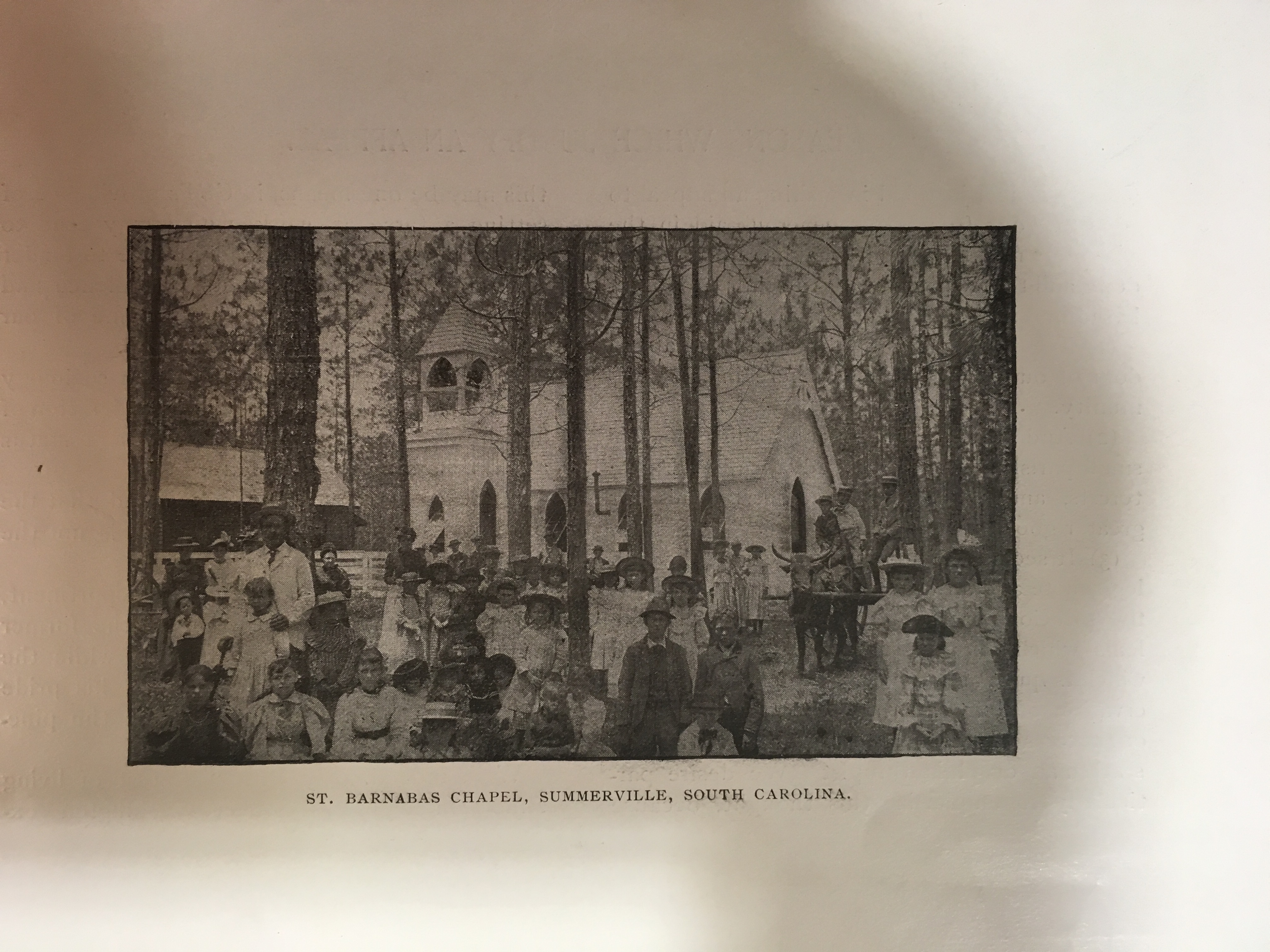
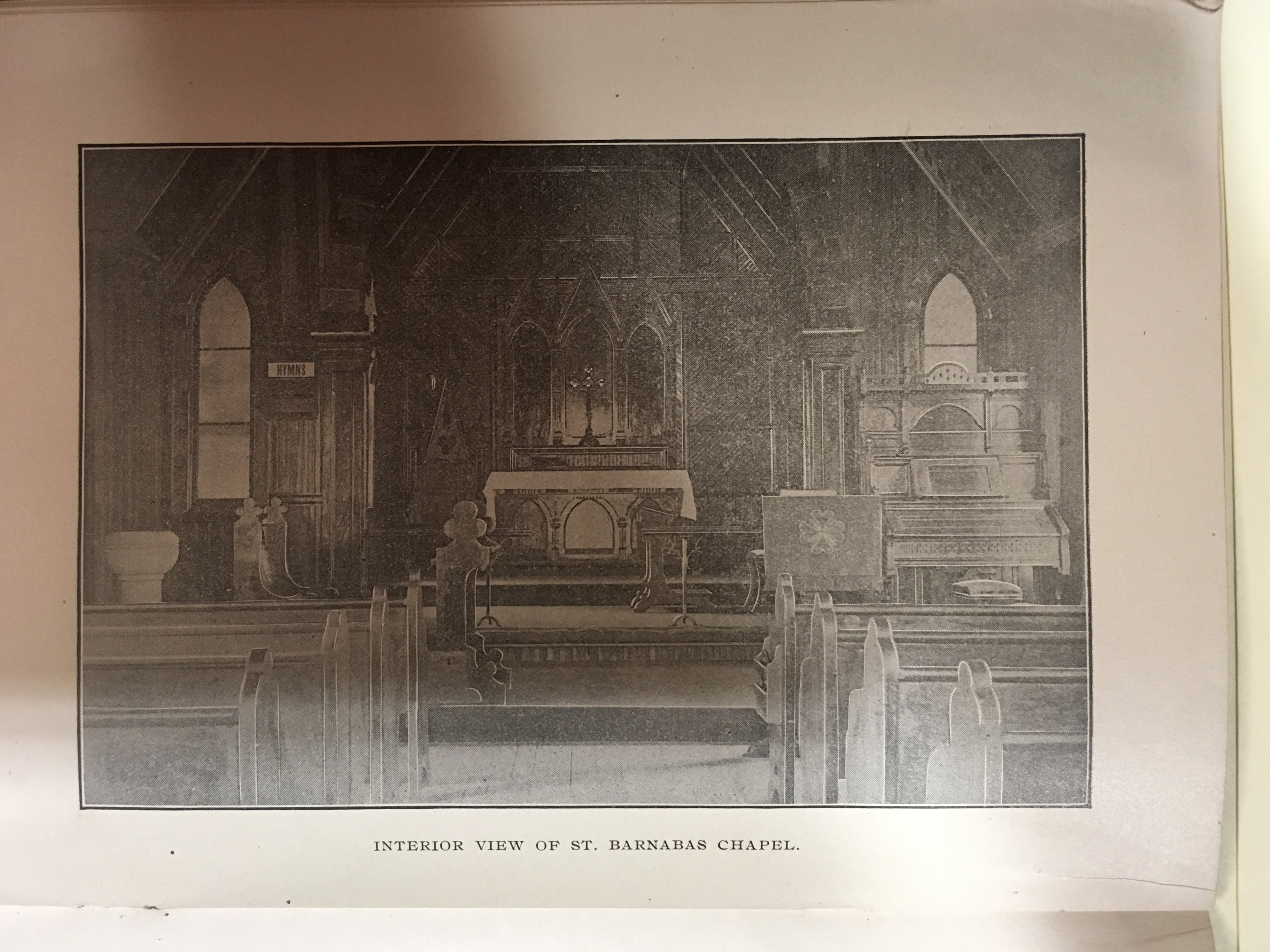
A biracial woman by the name of Kitty Springs, born Catherine Smith, who had been involved with the Mission for many years, donated a small piece of land. She also mortgaged one of her cottages and took out a loan to gather funds for the new building. In the future, I would like to do more research on Kitty Springs as she seems to have been quite a trailblazer for the times. Construction of the Chapel began around October of 1887 and was built at the intersection of Main Street and Highway 78 in Summerville. The structure was built in the late Gothic style and has an interior of Georgia Pine. An alter which was made by cabinet maker Jeff Braid and reading desk were presented to the Mission in July of 1888. A bell tower was added in August, 1894, followed by a bell in November. The bell was rung for the first time on the death of Bishop William B. W. Howe (Date is not noted). By 1896, the Mission was serving 42 families made up of 185 people.

St. Barnabas Chapel Exterior


Rectors of the Missionl included: Rev. LeGrande Guerry, Rev. Percival Whaley, Rev. James Glass, Rev. Carl Jagar, Rev. A. Ernest Cornish, and Rev. F. W. Ambler.

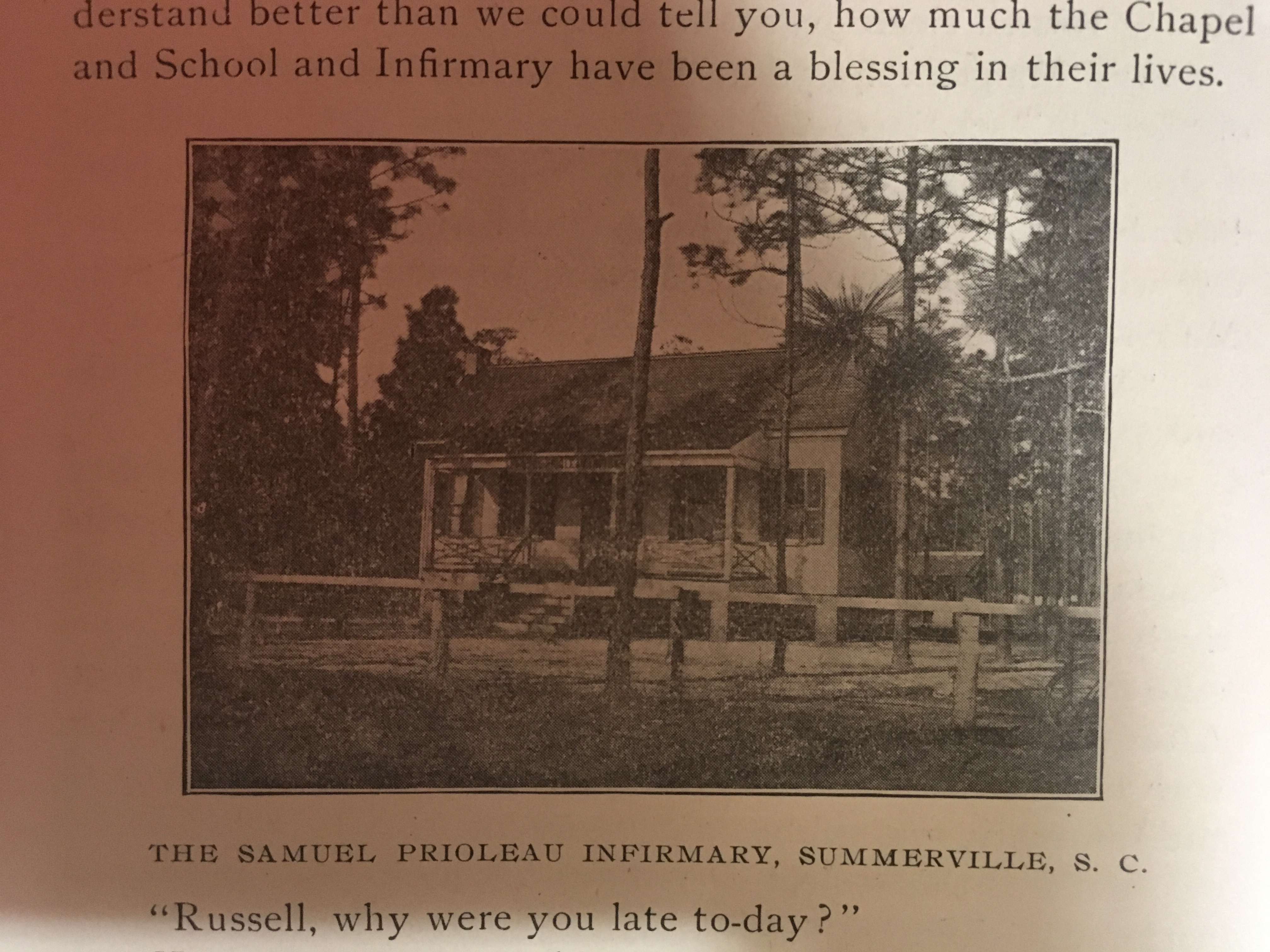
Around 1896, the Mission also began being used as a charitable infirmary run by William Russell Dehon. Mr. Dehon is also credited with helping to build the chapel and was a lay reader within the church. The Prioleau Infirmary which later became to Dorchester Hospital is said to be a direct offshoot from the mission work. Dr. Samuel Priouleau was the town doctor and Miss Aimee Parker was the nurse who served the community.

Samuel Prioleau Infirmary

The Shepard School was built on the property around 1900 and served the community as a day school. By 1930, the students had been absorbed into the regular school system. The following women worked at the school as teachers throughout its existence: Miss Lelia Anderson, Miss Lise Thompson, Miss Caroline Dickenson, Mrs. Claudia Fishburne Thurston, Miss Minnie Marshall, Miss Olive Veronee, Mrs. Maggie Lou Waters Carpenter, Mrs. Kate Simons Cornish, Mrs. Mary Smith Hutchinson, Mrs. E. H. Hutchinson, Mrs. William Doar, and Mrs. George Tupper.

In 1939, St. Barnabas Mission became dormant and was sold in 1945 to the Reformed Episcopal Church to use as a seminary and was moved about a half mile to the site of the Cummins Theological Seminary. It was renamed the Bishop Pengelley Memorial Chapel. In 1981, it was moved again to its present location at 705 S. Main Street in Summerville and is known as St. Paul’s Reformed Episcopal Church.

For more information about the Driggers family visit:

Free African Americans

PBS Frontline: The Blurred Racial Lines of Famous Families

Sources

Kwist, Margaret Scott. Porch Rocker Recollections of Summerville, South Carolina. Summerville, South Carolina: Linwood Press, Inc., 1980.

Marshall, Martha B. Stories from the Mission Field in the Pinelands Of South Carolina. Round Robin to the Junior Auxiliary Series, Publication no. 34. Hartford, Connecticut: Church Missions Publishing Company, 1900.

St. Barnabas Mission. In St. Paul’s Parish, Summerville, S.C. Pamphlet. The Vestry of St. Paul’s Church, Summerville, S.C. 11 February 1896.

St Barnabas Mission (Summerville, South Carolina). Registry and Ledger 1885-1898. South Carolina Historical Society, Charleston.

South Carolina. Charleston. News and Courier. 17 November 1946.

South Carolina. Charleston. The Post and Courier. 23 April 2012.

South Carolina Picture Project. https://scpictureproject.org : 2018.

Thorndale, William and William Dollarhide. Dorchester County, South Carolina Historic Resources Survey. Baltimore, Maryland: Genealogical Publishing Co., Inc., 1987.


WikiTree Source-a-Thon 2018

I was going to publish this tomorrow but then realized this morning that the deadline to sign up is tonight at Midnight!

WikiTree is having its third annual Source-a-Thon starting Friday, September 28th at 8 am until Monday, October 1 at 8 am.  It will be my second year participating and I am chomping at the bit to get going!

What is Source-a-Thon?

Source-a-Thon is an event/competition intended to make WikiTree a more valuable genealogical tool by adding sources to profiles that don’t yet have them.

Why should I participate?

Well, if you are a genealogical geek like myself, it’s just fun!  But there are other reasons including PRIZES!  Last time I checked in, there were $3500 worth of genealogical door prizes to be given away during the weekend.  Go here to see a list of prizes. Best of all you don’t have to be the best sourcer, you just have to participate.  Besides the possibility of winning a prize, you also get the satisfaction of giving your time to help others with their family history.

How do I participate?

First, if you do not already have a WikiTree account, you will need to sign up for one and agree to follow their Honor Code.  Next you will need to go to the register page and click “answer” at the bottom of the first part of the screen.

Then type “Sign me up” or something similar.  You can also put in a team name if you have one you would like to join.  You can see a list of teams here. I am on Team Carolina Cousins!

How do I add sources?

Your team will have a list of unsourced profiles available.  Once you have a profile to source, add a valid source which can be census records, Birth/Marriage/Death records/index references, military documents, land documents, wills, etc. DO NOT use ancestry trees as a source.  Once you have added your source, delete the {{Unsourced}} tag in the profile. WikiTree has an easy way to track what you do!  Once you save the profile, click on the “Challenge Tracker” button and choose the Source-a-Thon check box.  Then you are ready to go on to your next profile.

Need more help?

The wonderful volunteers have made a video about participating in Source-a-Thon:

Bad Neighbors (Part II): The Bigham Family of Florence County

If you have not read Part I, click here to read it first.

On Monday, January 17, 1921, The Bigham Family became headline news in newspapers throughout the country. The Abbeville Press and Banner’s headline proclaimed “Florence Tragedy Takes Five Lives” with the byline “L.S Bigham, For Whom Officer’s Search, Found Dead in Woods-Thought to be Suicide Following Killing of Mother, Sister, and Two Adopted Children. “.


Marjorie Bigham Black

According to these first reports, Smiley had shot his mother, his sister Marjorie and her two adopted sons Leo and John McCracken. It is then said that he ran into the woods where he shot himself in the head. The pistol, which belonged to Edmund, was still in his hand when he was found. The shootings were said to have occurred on Jan 15th at about 3:30 in the afternoon but Smiley’s body was not found until the next day. According to Edmund, he had eaten lunch with his family and then left the house at about 3:10 pm with his wife and children to see a nearby neighbor. When he was driving back to the house about 20 minutes later he saw his mother staggering out into the yard. He ran to her and he stated that she died soon after he reached her and had told him that Smiley had shot her. He also stated, that at the time he was running to his mother he saw his brother running into the woods. Two neighbors, T. D. Garrison and Hoyt Rostick, arrived soon after and helped him get his mother’s body into the house. Soon after the three men had found the youngest boy John dead near the back of the house. It wasn’t until a few hours later that they went upstairs and found Marjorie dead in her bedroom and then searchers found the older boy Leo wounded, yet still alive in the yard. Leo died early the next morning. Edmund also claimed that his brother had been very depressed recently. His brother’s body was not found until the next morning when Edmund insisted that the woods where he had seen him run to be searched. Continue reading “Bad Neighbors (Part II): The Bigham Family of Florence County”

Bad Neighbors (Part I): The Bigham Family of Florence County

Bad Neighbors.  Most of us have had them.  Maybe they leave an old junk car out on their front yard or play loud music at all hours of the night and day. Maybe they let their dog do his business on your lawn without cleaning it up.  There are many ways a neighbor can prove themselves troublesome to those who have the misfortune to live near them.  They may also prove themselves to be dangerous.

My maternal grandfather passed down an interesting story of bad neighbors to my mother and eventually her to me, that leads to the topic of this post of Palmetto Leaves.  My great grandparents, William & Telitha Perritt Keefe, lived near the town of Pamlico in Florence County SC in the early 1900s.  According to family lore, Telitha was sitting at her dressing table one day, brushing her hair, when a bullet flew by her head barely missing her.  The family immediately knew who was responsible: the Bigham family who were their neighbors.  Whenever this story was brought up I always had one big question: why?  The answer was always that they were mean people and wanted all the land that surrounded them.  My grandfather, who was born in 1900, claims that anytime their buggy was passing the Bighams on the road they would look straight ahead and not make eye contact.

Telitha Perritt Keefe
My great-grandmother Telitha Perritt Keefe

As I got older I became increasingly interested to learn more about this family.  Were they really as bad as the lore that had been passed down?  It did not take me long in my inquiries to realize that these tales were just the tip of the iceberg.  The Bighams were a bit notorious in that region of South Carolina and would for a time in the 1920’s be at the center of a horrendous crime. Continue reading “Bad Neighbors (Part I): The Bigham Family of Florence County”