Sharecropping: One Family’s Experience

After the end of the Civil War, sharecropping and tenant farming became a popular economic system in the South.  The system helped large landowners who had once depended on slave labor to produce their crops but who could not afford to pay wages and taxes to still profit off their land.  It also provided a way of survival for poor black and white farmers who did not own property.  Tenant farmers usually came into an agreement with equipment and mules and were thus able to negotiate better terms.  Sharecroppers were considered lowest on the economic ladder as they came with basically nothing but their ability to work.

My father, Pete Parker, grew up in a sharecropping family in South Carolina and I recently sat down and asked him to share a little about what that experience was like.  Here is a video of that interview:

My dad’s story has always fascinated me.  As he talks about in this video, he grew up in a sharecropping family and dropped out of school in the 8th grade to help on the farm.  He eventually joined the Air Force, complete his GED, went to college, and then completed law school.  He has run for the South Carolina legislature, been the South Carolina Consumer Affairs Advocate, and the Director of South Carolina Worker’s Compensation.

To find out more about sharecropping check out these links:

Sharecropping on Wikipedia

Sharecropping in the New Georgia Encyclopedia

Previous Generations of This Family Picked Cotton on This Property. Now, They’ve Reclaimed it.
Discover you family history through historical newspapers at Newspapers.com

Bad Neighbors (Part II): The Bigham Family of Florence County

If you have not read Part I, click here to read it first.

On Monday, January 17, 1921, The Bigham Family became headline news in newspapers throughout the country. The Abbeville Press and Banner’s headline proclaimed “Florence Tragedy Takes Five Lives” with the byline “L.S Bigham, For Whom Officer’s Search, Found Dead in Woods-Thought to be Suicide Following Killing of Mother, Sister, and Two Adopted Children. “.


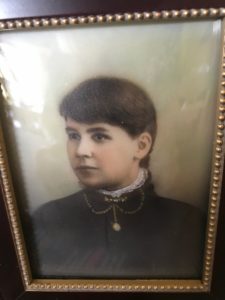
Marjorie Bigham Black

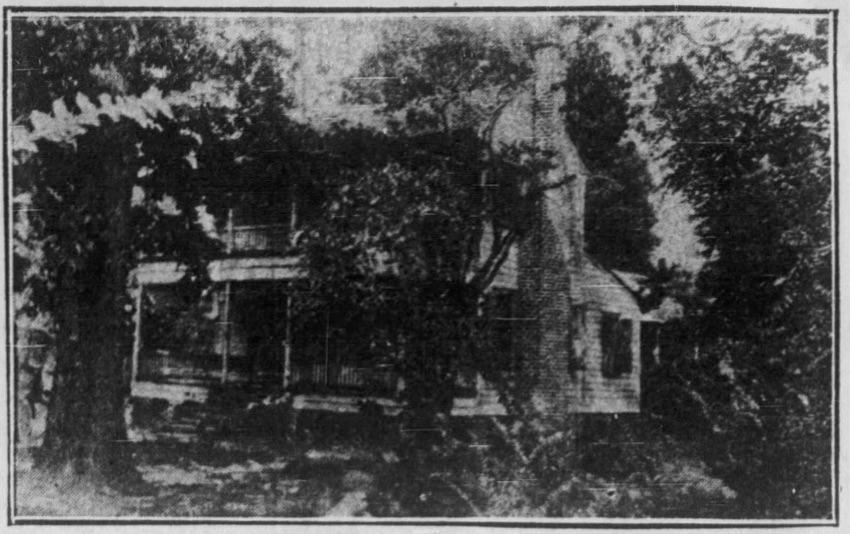
According to these first reports, Smiley had shot his mother, his sister Marjorie and her two adopted sons Leo and John McCracken. It is then said that he ran into the woods where he shot himself in the head. The pistol, which belonged to Edmund, was still in his hand when he was found. The shootings were said to have occurred on Jan 15th at about 3:30 in the afternoon but Smiley’s body was not found until the next day. According to Edmund, he had eaten lunch with his family and then left the house at about 3:10 pm with his wife and children to see a nearby neighbor. When he was driving back to the house about 20 minutes later he saw his mother staggering out into the yard. He ran to her and he stated that she died soon after he reached her and had told him that Smiley had shot her. He also stated, that at the time he was running to his mother he saw his brother running into the woods. Two neighbors, T. D. Garrison and Hoyt Rostick, arrived soon after and helped him get his mother’s body into the house. Soon after the three men had found the youngest boy John dead near the back of the house. It wasn’t until a few hours later that they went upstairs and found Marjorie dead in her bedroom and then searchers found the older boy Leo wounded, yet still alive in the yard. Leo died early the next morning. Edmund also claimed that his brother had been very depressed recently. His brother’s body was not found until the next morning when Edmund insisted that the woods where he had seen him run to be searched. Continue reading “Bad Neighbors (Part II): The Bigham Family of Florence County”

Bad Neighbors (Part I): The Bigham Family of Florence County

Bad Neighbors.  Most of us have had them.  Maybe they leave an old junk car out on their front yard or play loud music at all hours of the night and day. Maybe they let their dog do his business on your lawn without cleaning it up.  There are many ways a neighbor can prove themselves troublesome to those who have the misfortune to live near them.  They may also prove themselves to be dangerous.

My maternal grandfather passed down an interesting story of bad neighbors to my mother and eventually her to me, that leads to the topic of this post of Palmetto Leaves.  My great grandparents, William & Telitha Perritt Keefe, lived near the town of Pamlico in Florence County SC in the early 1900s.  According to family lore, Telitha was sitting at her dressing table one day, brushing her hair, when a bullet flew by her head barely missing her.  The family immediately knew who was responsible: the Bigham family who were their neighbors.  Whenever this story was brought up I always had one big question: why?  The answer was always that they were mean people and wanted all the land that surrounded them.  My grandfather, who was born in 1900, claims that anytime their buggy was passing the Bighams on the road they would look straight ahead and not make eye contact.

Telitha Perritt Keefe
My great-grandmother Telitha Perritt Keefe

As I got older I became increasingly interested to learn more about this family.  Were they really as bad as the lore that had been passed down?  It did not take me long in my inquiries to realize that these tales were just the tip of the iceberg.  The Bighams were a bit notorious in that region of South Carolina and would for a time in the 1920’s be at the center of a horrendous crime. Continue reading “Bad Neighbors (Part I): The Bigham Family of Florence County”