
If you have not read Part I, click here to read it first.
On Monday, January 17, 1921, The Bigham Family became headline news in newspapers throughout the country. The Abbeville Press and Banner’s headline proclaimed “Florence Tragedy Takes Five Lives” with the byline “L.S Bigham, For Whom Officer’s Search, Found Dead in Woods-Thought to be Suicide Following Killing of Mother, Sister, and Two Adopted Children. “.
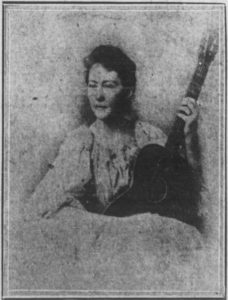
According to these first reports, Smiley had shot his mother, his sister Marjorie and her two adopted sons Leo and John McCracken. It is then said that he ran into the woods where he shot himself in the head. The pistol, which belonged to Edmund, was still in his hand when he was found. The shootings were said to have occurred on Jan 15th at about 3:30 in the afternoon but Smiley’s body was not found until the next day. According to Edmund, he had eaten lunch with his family and then left the house at about 3:10 pm with his wife and children to see a nearby neighbor. When he was driving back to the house about 20 minutes later he saw his mother staggering out into the yard. He ran to her and he stated that she died soon after he reached her and had told him that Smiley had shot her. He also stated, that at the time he was running to his mother he saw his brother running into the woods. Two neighbors, T. D. Garrison and Hoyt Rostick, arrived soon after and helped him get his mother’s body into the house. Soon after the three men had found the youngest boy John dead near the back of the house. It wasn’t until a few hours later that they went upstairs and found Marjorie dead in her bedroom and then searchers found the older boy Leo wounded, yet still alive in the yard. Leo died early the next morning. Edmund also claimed that his brother had been very depressed recently. His brother’s body was not found until the next morning when Edmund insisted that the woods where he had seen him run to be searched.
However, in the days to come, people involved in the investigation began doubting this story of events. There were definitely reasons to believe Leonard Smiley Bigham III did shoot his family as he was known to be upset over family money matters and was worried about being charged over the court documents. But on January 20th, Edmund Bigham was arrested based on a warrant sworn out by John W. McCracken, the father of the two murdered children. An affidavit was also given by Phillip Arrowsmith, an attorney that Marjorie and Smiley had hired. In the affidavit, he stated that he had been hired by the siblings in the Spring 1920. He cast doubt on the theory that the family was concerned about the bond owed on Cleveland Bigham by stating that money to pay the bond had already been set aside in an account. He also gave an account of meeting with Marjorie and Smiley on January 8th, at which time Marjorie drew up a new will and made the following statement to him: “I signed three blank deeds in the presence of witnesses and left them with Smiley so that if anything happened to me my father’s estate could be handled as my mother and Smiley desired. All these papers were stolen from Smiley. I found them in Edmund’s possession. When I attempted to secure possession of them, Edmund threw into a passion and threatened to take my life as well as that of my mother. I gave up all hope of getting the deeds back and his conduct is such that I am afraid he will kill me at any moment and I want you to prepare my will, giving all of my property to my brother Smiley, and charging him, as I know he will, to take care of my mother and my two little adopted boys.” This statement was attached to the will and witnessed by two men.
On January 26th, the Coroner’s Jury held its hearing starting at 2 pm and ending at 10pm that evening to a packed court room. About 20 witnesses were called to give testimony. Some of the witnesses claimed that they had heard Edmund make threats against family members. Members of a group of wood cutters who claimed to be out in the woods with both Edmund and Smiley earlier in the day of the murder also testified. The story that emerged from them was that at one point one of the workers asked Smiley to go look at something in another part of the woods but Edmund objected and told Smiley that he needed him to stay there with him. After the group of workers had gradually left the two brothers in the woods, it was claimed that a gunshot was heard. Another witness testified to later seeing Edmund come out of the woods alone. At the end of the hearing, after 15 minutes of deliberation, the verdict was made to charge Edmund of the murder of his five family members.
On March 11th, Edmund’s wife May was arrested in Florence for trying to give her husband a bottle of Chloroform in jail. The amount was said to be enough to cause death. However, the bottle was intercepted before it reached him. He would later claim that he had asked for the chloroform to help him sleep. Also, during this time before the trial, Edmund’s wife had attempted to record a deed at the clerk of courts but was unable to because she did not have the fee required. She stated that her husband had asked her to record the deed as he was in jail. Edmund was arraigned on March 21 and he pled “not guilty”. He still stuck by his original story of the events. The prosecutor presented many of the witnesses that had already been presented at the Coroner’s hearing while the defense tried to prove the case against Edmund’s brother Smiley. The state also presented witnesses that claimed that Edmund had directed them on exactly where to look for his brother’s body. Witnesses also testified that there had been terrible arguments between Edmund and his sister and that he was heard to threaten her. One worker who had been nearby at the time of this argument had been asked to run to get law enforcement by Marjorie because she was afraid Edmund would kill them. According to the testimony, Edmund then threatened the worker with death if he did as his sister asked. On March 26th Edmund’s wife and 14 year old daughter, Louise, testified before the court followed by Edmund himself. Edmund testified that the family had never paid him for his portion of their father’s estate. He also stated that the deed he had given his wife to record was given to him by the family as settlement of their father’s estate. Edmund stated that he did not know where his brother Smiley’s body was and that he only directed to the searchers in the direction he had last seen Smiley heading.
On March 28th, the jury came back with a verdict of guilty and the judge immediately sentenced him to be executed by electrocution on April 8th. When asked if he had anything to say before the sentence was read he said “ Nothing except that I am innocent. I know nothing of how that crime was committed. That is the truth, so help me God! That’s all I have to say. I wish my mother could come down and tell how that thing happened. I wish that little boy had lived when I asked Dr. W. H. Poston to save his life. He would have told the same things my wife and I told. Judge, I hope you will give me time so some of the people who testified here against me may have a chance to come forward and tell the truth and not come too late, like Judas making his offering of the thirty pieces of silver. I do hope to say something more, and I hope you will take no exception to it. As far as you are concerned, I have had a fair trial, but if people had had time to think things over and take it up with their God, they would have testified differently.”
Edmund’s attorney immediately filed an appeal and Edmund was transferred to the State Penitentiary to await his hearing with the Supreme Court, his execution being stayed. In June, the appeal was heard in the 12th South Carolina Circuit. Edmund’s lawyer, Mr. A. L. King argued that Edmund should be given a new trial because two of the jurors had made statements about Edmund’s guilt before the trial had begun. The presiding judge denied this appeal on June 23rd. In January 1922 the South Carolina Supreme Court dismissed Edmund’s appeal and upheld the previous decision. After this decision, Mr. King then filed an appeal to the United States Supreme Court which was also denied in April of 1922. In June, Edmund was transferred back to Florence County jail from death row in order to be resentenced. At this time, Mr. King again asked for an appeal based on new evidence that had come to light. Letters were presented to the court that were said to have been written by Smiley to his brother Edmund which showed that he was planning to kill his family. On June 9th, Edmund was once again sentenced to death to take place on July 14th. The judge denied the appeal for a new trial stating that he had no doubt that the letters presented as new evidence were forged.
Later the same month, Mr. King filed another appeal with the Supreme Court which the District Attorney vowed to fight. However, the Supreme Court agreed to hear the case based on the new evidence. Adding more drama to the story, during the time leading up to the Supreme Court hearing, a man named J. W. Clopton of Leslie, GA wrote a letter to The Florence Daily Times concerning the murder of his grandson Walter H. Wade. Wade was murdered on the night of August 17th, 1916 and his body was thrown into the Flint River. The grandfather stated that he had always thought Edmund was responsible or knew who was responsible for his murder. The case made its way back before the Supreme Court in November of 1922 but in April 1923 it was the decision of the court not to grant a new trial. In June 1923, Bigham’s attorney was granted a motion by the State Supreme Court to be permitted to ask the Florence Circuit court for a new trial.
On April 3, 1924, after 3 years spent mainly on death row, Edmund was granted a new trial. The trial was set to be heard in Conway, S.C after his attorney asked for a change of venue. In late September of 1924, the trial opened amidst much drama, escalating when the second witness of the day, George J Steele, died on the stand from a stroke in front of a packed courtroom. The court was adjourned until the following weekend to allow people to attend his funeral. When the court readjourned, the new letters that were alleged to be a confession written before the crimes by Smiley were presented. Also at this time, a brain surgeon named Dr. J. D. Smyser, who had examined the body of Dora Bigham after it had recently been exhumed, stated that the wound she suffered would have been the same as a beheading, thus casting doubt on Edmund’s story that his mother was running to the road and that she spoke to him before her death. Mrs. Bigham’s skull was presented as evidence before the court which as you can imagine caused quite a stir. Many in the courtroom felt that Edmund’s demeanor was too calm considering his deceased mother’s skull was on display. The doctor also testified that it was his opinion from looking at how the gun was held in Smiley’s hand and the gunpowder on his temple, that his death had not been suicide and that the gun had been placed in his hand after death. Edmund once again took the stand in his own defense. On October 1st, there was more excitement in the courtroom when one of the defense attorneys almost came to blows with one of the prosecution attorneys. Other attorneys on both sides had to intervene to stop the fight. The fight occurred when the prosecution kept trying to bring up other murders that Edmund had been associated with in the past and the defense kept objecting.
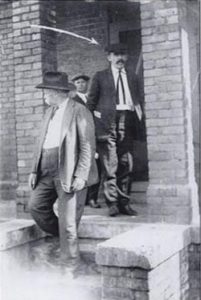
After a 10 day trial, the jury once again returned a verdict of guilty after 4 hours of deliberation. For the third time, Edmund was sentenced to die by the electric chair. The date of his execution was set as October 31st. Once again, Edmund’s lawyers filed an appeal to the state Supreme Court and his execution was delayed until a determination could be made. In October 1925, the appeal was heard before the Supreme Court. Edmund’s lawyers argued that the case had been unfairly tried. First, the witness Mr. Steele had given evidence of seeing a bloody handprint in the Bigham home after the murder but the witness passed away before they were able to cross-examine him. Secondly, they argued that the prosecuting attorneys had brought up prejudicial statements when they questioned Edmund about the murders of Arthur Davis on the Bigham land and the murder of Walter Wade in Georgia. The Supreme Court ruled in Edmund’s favor in February 1926, stating that the behavior of the prosecuting attorney had been “reprehensible” in bringing up murders Edmund had never been charged with. They determined that he would be granted a new trial.
After many delays, Edmund’s third trial took place in April of 1927. After the jury had been selected but before any testimony was heard, the state asked that the jury return a directed verdict of guilty with a recommendation of mercy to bring an end to the long trial process. This was agreed to by both the defense and prosecution. As part of this agreement Edmund was sentenced to life in prison instead of execution and returned to the State Penitentiary. He was said to have been a model prisoner during his jail time and was released on parole in June 1960 after 39 years in prison. After his release he moved to Marion, South Carolina where he passed away at the age 83 on June 13, 1962. My grandfather told my mother that he met Edmund during those two years that he lived in Marion. He was visiting someone who was a neighbor of Edmund’s and spoke to him briefly to tell him that his family used to be neighbors of his family. He told my mother that Edmund just replied, “huh” and did not seem to want to talk to him.
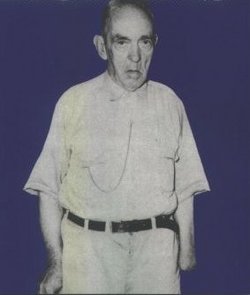
For a time, residents of the area swore that there was a “Bigham Curse”. It was said that on the day Edmund was first sentenced to death, it had been a beautiful sunny day until about 30 minutes after the sentencing when a storm had come in. People would also point to the abrupt death of Mr. Steele on the witness stand. Following the second trial, the judge who had sentenced Edmund to death developed a severe eye infection only a few days later. In September 1925, it was reported that Fritz Cox, who had been living on the Bigham property, died of pistol wounds. Many people even expressed the thought that maybe it would be a good idea to just let Bigham go if he promised never to come back so that no more misfortune would fall upon them. To stoke even more macabre speculation, the remains of a body were found by tenants of the old Bigham household under the home after Edmund’s final trial. The Bigham story became bigger than its dark reality.
As far as I am concerned, there are still many questions that were left unanswered. What happened to Cleveland? Would a man continue to declare his innocence for 39 years if he was really guilty? Were some of the crimes attributed to Bighams born out of a dislike for the family? Maybe we will never know!
Bibliography & Research Notes
Newspaper Articles used in this post are from Newspapers.com
“Florence Tragedy Takes Five Lives”. The Abbeville Press and Banner (Abbeville, South Carolina). 17 January 1921. Digital images.newspapers.com. http://Newspapers.com.
“Bigham Trdgedy to be Given Careful Probe; Suicide Now Doubted”. The Times and Democrat (Orangeburg, South Carolina). 18 January 1921. Digital images.newspapers.com. http://Newspapers.com.
“Killed in Dark”, The Newberry Weekly Herald (Newberry, South Carolina). 7 September 1909. Digital images.newspapers.com. http://Newspapers.com.
“Will Be Probed”, The Times and Democrat (Orangeburg, South Carolina). 11 September 1909. Digital images.newspapers.com. http://Newspapers.com.
“Can’t Be Found”, The Times and Democrat(Orangeburg, South Carolina). 13 November 1909. Digital images.newspapers.com. http://Newspapers.com.
“Coroner’s Jury Waits for More Information”, The Abbeville Press and Banner (Abbeville, South Carolina). 19 January 1921. Digital images.newspapers.com. http://Newspapers.com.
“Florence Tragedy Laid to Living Son”. The Abbeville Press and Banner (Abbeville, South Carolina). 28 Janusary 1921. Digital images. newspapers.com. http://Newspapers.com.
“Sends Chloroform to Bigham is the Charge Against Wife”. The Index-Journal (Greenwood, South Carolina). 13 March 1921. Digital images. newspapers.com. http://Newspapers.com.
“Judge Overrules Plea for Bigham”, The Manning Times (Manning, South Carolina). 23 March 1921. Digital images. newspapers.com. http://Newspapers.com.
“Bingham Lays Blame for Murder on Brother”. Sunday Index-Journal (Greenwood: South Carolina). 27 March 1921.Digital images. newspapers.com. http://Newspapers.com.
“Bingham Sentenced to Chair”. The Yorkville Enquirer (Yorkville, South Carolina. 29 March 1921. Digital images. newspapers.com. http://Newspapers.com.
“E. D. Bingham to Columbia”. The Manning Times (Manning, South Carolina). 6 April 1921. Digital images. newspapers.com. http://Newspapers.com.
“Attorney for E. D. Bigham Argues for a New Trial”. The Gaffney Ledger (Gaffney, South Carolina). 18 June 1921.Digital images. newspapers.com. http://Newspapers.com.
“Bigham Must Pay Penalty Court Holds”. The Greenville News (Greenville, South Carolina). 27 January 1922. Digital images. newspapers.com. http://Newspapers.com.
“Bigham Returned for Resentance”.The Greenville News (Greenville, South Carolina). 4 June 1922. Digital images. newspapers.com. http://Newspapers.com.
“Ask New Trial in Bigham Case”. The Greenville News (Greenville, South Carolina). 6 June 1922. Digital images. newspapers.com. http://Newspapers.com.
“Bigham Given Death Sentence”. The Union Daily (Union, South Carolina). 10 Jun 1922. Digital images. newspapers.com. http://Newspapers.com.
“Will Fight Bigham’s Motion for Appeal”. The Watchman and Southern (Sumter, South Carolina). 1 July 1922. Digital images. newspapers.com. http://Newspapers.com.
“Bigham’s Life is Prolonged by an Appeal to Court”. The Newberry Weekly Herald (Newberry, South Carolina). 18 July 1922. Digital images. newspapers.com. http://Newspapers.com.
“Wants Bigham Tell of Wade Murder”. The Bamberg Herald (Bamberg, South Carolina). 20 July 1922. Digital images. newspapers.com. http://Newspapers.com.
“Supreme Court Dismisses Bigham’s Appeal; Effort to Save Life to be Made”. The Greenville News (Greenville, South Carolina). 4 April 1923. Digital images. newspapers.com. http://Newspapers.com.
“Another Step is Won for Bigham for New Trial”. The Index -Journal (Greenwood, South Carolina). 16 June 1923. Digital images. newspapers.com. http://Newspapers.com.
“Bigham is Granted New Murder Trial”. The Gaffney Ledger (Gaffney, South Carolina). 5 April 1924. Digital images. newspapers.com. http://Newspapers.com
“Shipp Grants Change of Venue for Bigham on Pleas by Counsel”. The Greenville News (Greenville, South Carolina). 17 June 1924. Digital images. newspapers.com. http://Newspapers.com.
“Bigham Trial Witness Dies From Stroke on Stand”. The Greenville News (Greenville, South Carolina). 26 September 1924. Digital images. newspapers.com. http://Newspapers.com.
“Steele’s Death Causes Court to Close Until Monday”. Florence Morning News (Florence, South Carolina). 27 September 1924. Digital images. newspapers.com. http://Newspapers.com.
“Notorious Letter Excites Interest at Bigham Trial”. The Greenville News (Greenville, South Carolina). 30 September 1924. Digital images. newspapers.com. http://Newspapers.com.
“Judge to Rule Lawyers in Bigham Trial in Contempt After Clash”. The Greenville News (Greenville, South Carolina). 2 October 1924. Page 1.
“Bigham to Die Oct.31”. Florence Morning News (Florence, South Carolina). 7 October 1924. Digital images. newspapers.com. http://Newspapers.com.
“‘Bigham Curse’ Rumors Again”. The Index-Journal (Greenwood, South Carolina). 10 October 1924. Digital images. newspapers.com. http://Newspapers.com.
“Bigham has Seen Nine go to Chair”. The Greenville News (Greenville, South Carolina). 8 December 1924. Digital images. newspapers.com. http://Newspapers.com.
“The Bigham Jinx”. The Greenville News (Greenville, South Carolina). 6 September 1925. Digital images. newspapers.com. http://Newspapers.com.
“Bigham Hearing is Taken Up by Supreme Court”. The Greenville News (Greenville, South Carolina). 13 October 1925. Digital images. newspapers.com. http://Newspapers.com.
“Edward D. Bigham Granted a New Trial”. Florence Morning News (Florence, South Carolina). 2 February 1926. Digital images. newspapers.com. http://Newspapers.com.
“Bigham Doesn’t Hurry to Leave S.C. Prison”. The Index-Journal (Greenwood, South Carolina). 3 June 1960. Digital images. newspapers.com. http://Newspapers.com.
“Edmund Bigham, Central Figure in Bizarre Murder Case, is Dead”. The Greenville News (Greenville, South Carolina). 14 June 1962. Digital images. newspapers.com. http://Newspapers.com.
Online Source:
You can find the transcription of the appeal to the Supreme Court held in January 1922.
Supreme Court of South Carolina. “State V. Bingham”. Jan 26, 1922. Online Transcript. https://casetext.com/case/state-v-bigham-6: accessed September 19, 2018.
Books:
I really enjoyed your writing about the Bighams. Was that a picture of the actual Bigham home? Thanks for providing the family photos as well. I had never seen most of them. Finally, do you have a theory as to where Cleveland lived out the rest of his life?